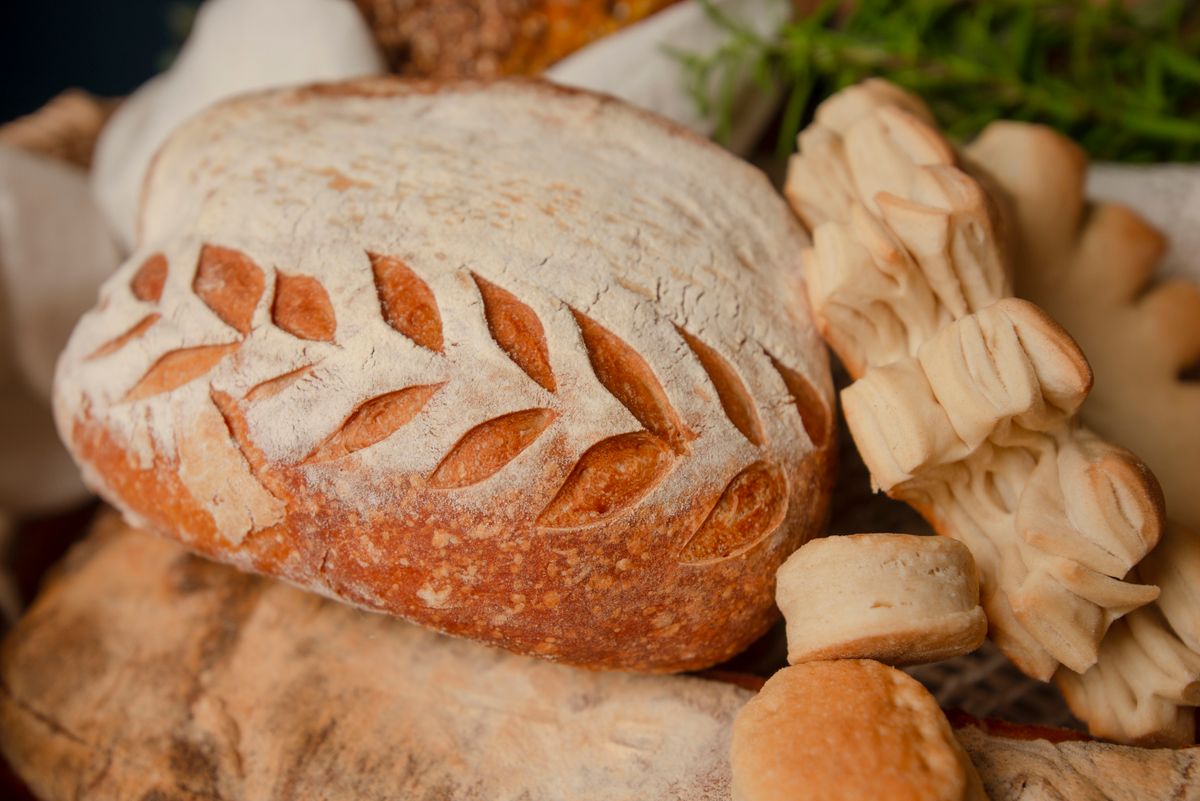
Recipes & Savory Breads: from classic boules to specialty loaves
A basic sourdough loaf needs just 4 ingredients — flour, water, salt, and starter, usually in a roughly 100:75:2:20 baker's-percentage ratio — yet the same base scales into focaccia, baguettes, bagels, and pizza dough with only small changes to hydration and shaping. This hub covers savory recipes from classic boules to ciabatta, sandwich bread, and pretzels. The recipe scaler converts any recipe here to a different loaf size or flour weight in seconds.
Helpful tools for this topic
Free and no sign-up needed. These tools do the calculating and planning for you.
All guides on Recipes & Savory Breads

How to Bake a Soft Sourdough Sandwich Loaf Your Family Will Actually Eat
Not every sourdough needs a crackling crust and rustic shape. This enriched sandwich loaf is soft, sliceable, and perfect for school lunches — with all the flavor wild yeast brings to the table.
Read guide →
Sourdough Herb and Garlic Bread Recipe
A fragrant sourdough loaf loaded with roasted garlic and fresh herbs. The garlic mellows during fermentation while the herbs perfume every slice.
Read guide →
Sourdough Grape Focaccia Schiacciata Recipe
A classic Tuscan harvest bread studded with sweet grapes, drizzled with olive oil, and sprinkled with sugar. Sourdough makes this traditional schiacciata even better.
Read guide →
Sourdough Burger Buns That Hold Up
Soft, pillowy sourdough burger buns that actually hold together through a loaded burger. No more soggy, collapsing buns.
Read guide →
Sourdough Cheese Bread: Three Tasty Variations
Three ways to bake incredible sourdough cheese bread — from a gooey cheddar pull-apart to a sharp Parmesan-crusted boule and a spicy pepper jack loaf.
Read guide →
Sourdough Bagels at Home: Chewy, Dense, and Absolutely Worth the Effort
Real bagels are boiled, dense, and chewy. Sourdough fermentation adds a tangy depth that puts store-bought bagels to shame. This is the recipe that converted my whole family.
Read guide →
Sourdough Croissants: A Weekend Project Worth the Effort
Flaky, buttery, naturally leavened croissants made with sourdough starter. This is a weekend project, but the results are bakery-quality pastry from your home oven.
Read guide →
Baking Sourdough With Kids Without Losing Your Mind
Kids and sourdough are a surprisingly good match. The dough is forgiving, the science is fascinating, and the ugly loaves taste just as good. Here is how to make it fun instead of stressful.
Read guide →
The Sourdough Pizza Dough That Made Me Stop Ordering Delivery
Once you taste pizza made with real sourdough dough, the delivery box stuff feels like cardboard. This recipe is forgiving, flexible, and better than anything you can order.
Read guide →
Sourdough Pita Bread: Puffy Pockets Every Time
Homemade sourdough pita that actually puffs into perfect pockets. The secret is screaming hot heat and a dough that is easier than you think.
Read guide →
Baking With Whole Wheat: A Sourdough Guide for People Who Want Flavor and Texture
Whole wheat sourdough doesn't have to be dense, dry, or depressing. With a few adjustments to your process, you can bake whole wheat loaves that are light, flavorful, and actually enjoyable.
Read guide →
How to Build a Sourdough Baking Schedule Around Your Work
Sourdough does not have to take over your life. Here are realistic schedules for full-time workers, shift workers, and weekend-only bakers.
Read guide →
Sourdough Tortillas: Soft and Pliable Every Time
Homemade sourdough tortillas that stay soft and foldable. Just five ingredients, a hot skillet, and 30 minutes of your time.
Read guide →
Kamut Sourdough Bread: Nutty and Golden
Kamut (Khorasan wheat) produces a stunning golden sourdough with a rich, buttery flavor. Here is how to work with this ancient grain for your best loaf.
Read guide →
How Long Does Sourdough Bread Actually Last?
Sourdough lasts longer than regular bread, but how long exactly? Here is a realistic guide to shelf life, storage, and when to toss it.
Read guide →
Sourdough Dinner Rolls for Holidays
Soft, pull-apart dinner rolls made with sourdough for flavor that impresses at any holiday table. Make the dough ahead and bake fresh when guests arrive.
Read guide →
Einkorn Sourdough Bread: Ancient Grain Revival
Einkorn is the oldest cultivated wheat, and it makes a uniquely flavored sourdough with a golden crumb and nutty sweetness you will not find in modern wheat.
Read guide →
Sourdough Breadsticks: Perfect Party Snack
Crispy, golden breadsticks made with sourdough for extra flavor. These are absurdly easy to make and disappear faster than you can bake them.
Read guide →
Sourdough Naan: Quick Flatbread from Discard
Turn your sourdough discard into soft, bubbly naan in under 30 minutes. No oven required — just a hot skillet and a few pantry staples.
Read guide →
How to Convert Any Bread Recipe to Sourdough
That favorite bread recipe from your grandmother or a cookbook? You can convert it to sourdough. Here is the simple math and method to make it work every time.
Read guide →
Sourdough Brioche: Rich Bread Without the Guilt
Buttery, pillowy brioche made with sourdough starter instead of commercial yeast. The long fermentation adds depth and makes this indulgent bread easier on your stomach.
Read guide →
Sourdough Bread Bowls: Edible Serving Dishes for Soup Season
A sourdough bread bowl turns a simple bowl of soup into an event. Here is how to shape, bake, and hollow out the perfect edible vessel.
Read guide →
10 Sourdough Discard Recipes That Are Worth Making on Purpose
Sourdough discard does not have to be waste. These ten recipes turn leftover starter into breakfast, snacks, and dinner, and some are good enough to become your main reason to maintain a starter.
Read guide →
Baking for Community: How to Share Sourdough Beyond Your Kitchen
Sourdough baking connects people in ways that few hobbies can. Here are practical ideas for sharing your baking with neighbors, local organizations, and fellow bakers.
Read guide →More guides on Recipes & Savory Breads
- Sourdough Bread Research Roundup: What Science Is Discovering
- Baking Sourdough in Different Climates and Seasons
- Reading Your Sourdough Crumb: What It Tells You
- Sourdough Croissants: A Weekend Project Guide
- Sourdough and Gluten Sensitivity: What Research Says
- Baking Sourdough Rye Bread: Techniques and Recipes
- Sourdough Baguettes at Home: A Step-by-Step Guide
- How to Control Sourdough Flavor: More or Less Tang
- A Sourdough Baking Schedule for Busy People
- Flour Types for Sourdough: Bread Flour, AP, Whole Wheat, and Beyond
- Baking Great Whole Wheat Sourdough Bread
- How to Store Sourdough Bread for Maximum Freshness
- Working with Enriched Sourdough Doughs
- Soft Sourdough Sandwich Bread for Everyday Use
- The Best Sourdough Pizza Dough You Will Ever Make
- Foolproof Sourdough Focaccia Recipe
- Sourdough Bagels: Boiled, Baked, and Better Than the Bakery
- Sourdough Flour Types Compared: Which to Use When
- 10 Delicious Sourdough Discard Recipes
- The Perfect Sourdough Bread Recipe for Beginners
- Sourdough Soft Pretzels: Chewy, Salty, and Utterly Addictive
- Sourdough Sandwich Bread: Soft Enough for PB&J
- Sourdough English Muffins: Nooks, Crannies, and No Oven Needed
- Crispy Sourdough Crackers in 30 Minutes
- Sourdough Pizza Dough: Better Than Any Delivery Pizza
- Sourdough Baguette: French Crust, Homemade Sourdough
- Hearty Rye Sourdough Bread: Bakery-Quality at Home
- Sourdough Ciabatta with Large Open Crumb: No Yeast Needed
- Spelt Sourdough Bread: Nutty, Aromatic, and Easy to Digest
- Easy Sourdough Focaccia: Your Starter's Best Side Project
- Whole Wheat Sourdough Bread: Moist Instead of Dry
- Sourdough Bread with a Perfectly Crispy Crust: The Secret Is Steam
- Your First Sourdough Loaf: A Step-by-Step Recipe
New guides on Recipes & Savory Breads are added regularly and appear here automatically as soon as they go live.
Frequently asked questions
What's the actual difference between sourdough and regular yeasted bread recipes?
Sourdough replaces commercial yeast with a wild-fermented starter, which typically means longer fermentation times (hours instead of minutes) but develops more complex flavor and better digestibility for many people. The core flour-water-salt ratios are otherwise similar between the two.
Can I convert any bread recipe to sourdough?
Most yeasted recipes convert by replacing the commercial yeast with roughly 20% of the flour weight in active starter and extending rise times 3 to 4 times longer. Very enriched doughs (lots of butter, eggs) need slightly more starter since fat and sugar slow fermentation.
Why is my pizza dough recipe different from my bread recipe?
Pizza dough typically uses lower hydration (60-65%) than a rustic loaf (75-85%) for easier shaping and stretching without tearing, and often skips the long bulk ferment in favor of a cold retard in the fridge for flavor. The lower water content also helps the crust crisp rather than stay doughy.
What makes focaccia so much easier than a boule for beginners?
Focaccia's high hydration (80%+) and pan-baked format remove the two hardest parts of bread baking — precise shaping and getting a good oven spring without a Dutch oven. The dimpled surface also forgives uneven shaping that would show clearly on a round loaf.
Do bagels really need to be boiled before baking?
Yes — boiling for 30 to 90 seconds per side gelatinizes the surface starch, which is what gives bagels their characteristic chewy crust instead of a soft, bread-like one. Skipping this step produces a roll shaped like a bagel but without the texture that defines it.
What flour works best for sandwich bread versus a rustic boule?
Sandwich bread benefits from all-purpose or bread flour with slightly less protein variation for a softer, more uniform crumb, often baked in a loaf pan rather than free-form. Rustic boules favor higher-protein bread flour for the open, irregular crumb and chewier crust that free-form baking produces.