Sourdough Herb and Garlic Bread Recipe
This article may contain affiliate links. If you make a purchase through these links, we may earn a small commission at no extra cost to you. This helps us keep creating free content.

Garlic bread is something most people think of as a side dish, a baguette split open, smeared with garlic butter, and toasted. But what if the garlic was baked directly into the sourdough itself? Not raw garlic, which would be harsh and overpowering, but roasted garlic, sweet, mellow, almost caramelized, folded into the dough along with fresh rosemary and thyme. The result is a loaf that perfumes your entire kitchen as it bakes and delivers garlic and herb flavor in every single bite.
This is one of my most requested recipes, and for good reason. It is a crowd-pleaser that works as well alongside a weeknight pasta dinner as it does on a holiday table.
Roast the Garlic First
You need to roast the garlic before it goes into the dough. Raw garlic is too harsh and can actually inhibit yeast activity. Roasted garlic is sweet, soft, and spreadable, it integrates beautifully into the dough without fighting the fermentation.

Cut the top off 2 whole heads of garlic to expose the cloves. Drizzle with olive oil, wrap in foil, and roast at 400°F (200°C) for 35 to 40 minutes until the cloves are golden and soft enough to squeeze out like paste. Let cool completely. Squeeze the roasted cloves out of their skins, you should have about 40g of roasted garlic paste.
Ingredients
- 400g bread flour
- 280g water (room temperature)
- 80g active sourdough starter
- 8g fine sea salt
- 40g roasted garlic (from about 2 heads)
- 10g fresh rosemary (roughly chopped)
- 5g fresh thyme leaves
- 15g olive oil
- Flaky sea salt and extra rosemary for the top
Method
Step 1: Mix the flour, water, and starter until no dry flour remains. Rest for 30 minutes (autolyse). Add the salt and olive oil, squeezing and folding until incorporated, about 2 minutes. The oil makes the dough feel slippery at first, but it will absorb fully with a few minutes of working.

Step 2: Perform 4 sets of stretch and folds during the first 2 hours of bulk fermentation, spaced 30 minutes apart. During the second set, add the roasted garlic, rosemary, and thyme. Spread the garlic and herbs across the dough surface, then fold them in with 4 to 6 stretch-and-fold motions. They do not need to be perfectly distributed, pockets of concentrated garlic are actually a feature, not a bug.
Step 3: After the last set of folds, leave the dough alone for another 2 to 3 hours until it has risen by 50 to 75 percent. It should feel puffy and airy, and you should be able to see and smell the herbs and garlic throughout.
Step 4: Preshape into a round on a lightly floured surface. Rest for 20 minutes. Final shape as a boule, fold the edges toward the center firmly to create surface tension, flip seam-side up into a floured banneton. Some garlic pieces will be visible on the surface, which is fine, they will caramelize beautifully during baking.
Step 5: Cover and cold proof in the fridge for 8 to 24 hours. The cold retard lets the garlic and herb flavors permeate deeply into the dough. A minimum of 12 hours gives the best flavor development.
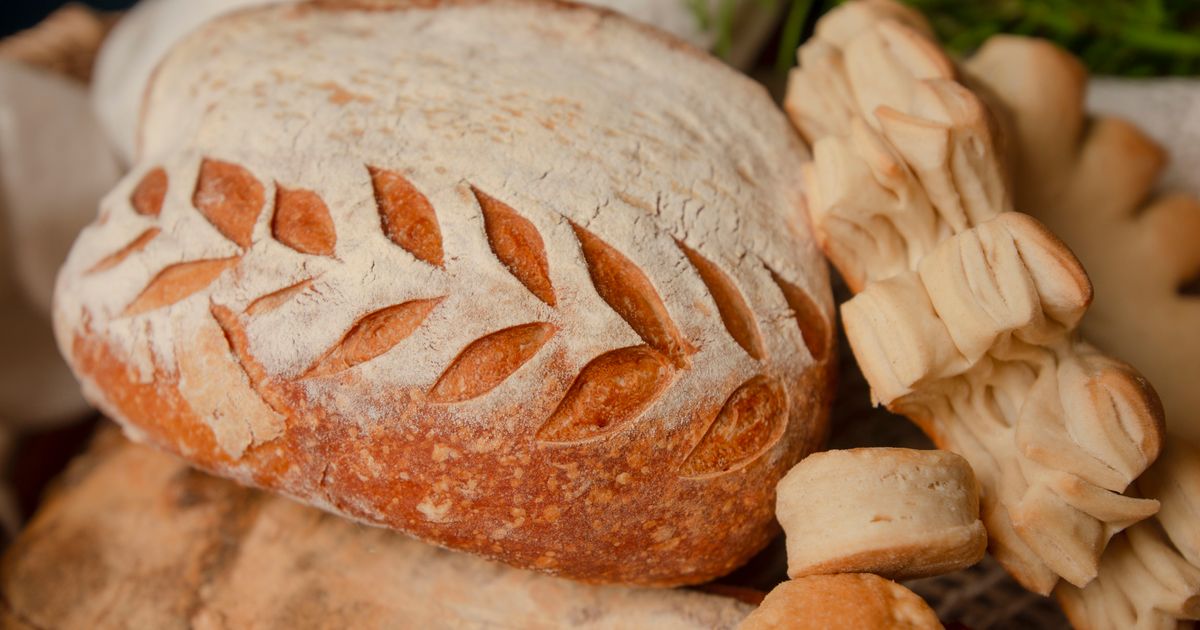
Step 6: Preheat your oven to 450°F (230°C) with a Dutch oven inside for at least 45 minutes. Turn the cold dough out onto parchment paper. Score with a single deep slash. Sprinkle a few fresh rosemary leaves and some flaky sea salt on top before loading.
Step 7: Bake covered for 25 minutes, then uncovered for 20 to 25 minutes until deep golden brown. The exposed garlic pieces will be toasted and caramelized, and the rosemary on top will be fragrant and crispy. Cool on a wire rack for at least 1 hour.
Serving
This bread is incredible on its own, just tear off a piece and the aroma hits you. It is spectacular alongside pasta, soup, or a rich stew. Sliced and toasted, it makes the best garlic bread you have ever had (garlic bread made from garlic bread, inception). It also makes an unforgettable grilled cheese sandwich.
For more flavored sourdough ideas, try Sourdough Cheese Bread or experiment with additions in my Focaccia Recipe.
⚠️Disclaimer: This article is for informational purposes only. Fermenting and brewing require strict food hygiene — including correct fermentation times, temperatures, and cleanliness. Home-brewed beverages may contain alcohol. When in doubt, consult a food safety expert.
Published by the Sourdough Joe editorial team. Published August 25, 2026. Updated September 11, 2026.
Editorial responsibility: see Imprint.
Spotted an error or have something to add? corrections@sourdoughjoe.com
🧭Part of our topic hub: Recipes & Savory Breads→You might also like

Open Crumb vs Tight Crumb Explained
Open crumb gets all the Instagram love, but tight crumb has its own advantages. Here is what determines crumb structure and how to control it in your bakes.

Sourdough Burger Buns That Hold Up
Soft, pillowy sourdough burger buns that actually hold together through a loaded burger. No more soggy, collapsing buns.

Sourdough Chocolate Cake: Yes, Really
A rich, fudgy chocolate cake made with sourdough discard. The tang enhances the chocolate flavor in a way that will change how you think about cake.
Explore more
All articles on Sourdough Joe →
Fresh from the Oven
New recipes, baking science, and troubleshooting tips — every Saturday morning.
🎁 Free bonus: Your First Sourdough Loaf Guide (PDF)