Whole Wheat Sourdough Bread: Moist Instead of Dry
This article may contain affiliate links. If you make a purchase through these links, we may earn a small commission at no extra cost to you. This helps us keep creating free content.

Let's talk about the elephant in the bakery: most whole wheat bread is terrible. Dense, dry, crumbly, with a crust like cardboard. You've probably baked a loaf or two that could double as a doorstop. I know I have. And that experience scares a lot of home bakers away from whole wheat entirely.
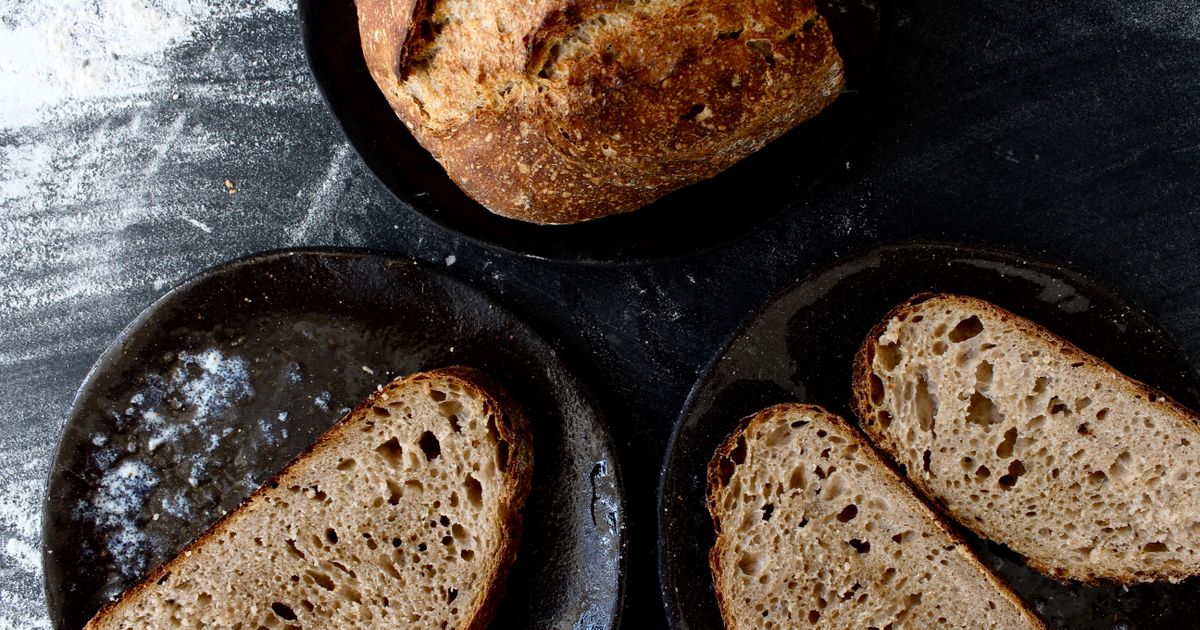
But here's the thing, whole wheat sourdough, done right, is one of the most flavorful breads you can make. The nutty, slightly sweet flavor of fresh whole grain combined with sourdough's tangy complexity is genuinely special. And it can be moist, tender, and open-crumbed. You just need to handle it differently than white flour dough.
This guide covers everything: why whole wheat behaves differently, the techniques that solve the dryness problem, a full recipe, and the common mistakes that lead to bricks. Let's turn whole wheat into something you actually look forward to baking.

Why Whole Wheat Is Different
To fix the problem, you need to understand it. Whole wheat flour contains the entire grain: the starchy endosperm (what white flour is), the oily germ, and the fibrous bran. That bran is the troublemaker. Here's what it does:
- Absorbs more water: Bran is like a sponge. Whole wheat flour absorbs significantly more water than white flour, which means dough that seems well-hydrated at mixing can end up dry and tight after the bran has finished drinking.
- Cuts gluten strands: The sharp edges of bran particles physically slice through developing gluten. This is why whole wheat dough tears more easily and has trouble holding gas.
- Ferments faster: The extra nutrients in whole grain flour feed your starter more aggressively, which means faster fermentation and a narrower window before over-proofing.
Technique 1: Extended Autolyse
Autolyse is when you mix flour and water and let them sit before adding starter and salt. For white flour dough, 30 minutes is typical. For whole wheat, you want 60-90 minutes or even longer.
During this extended rest, the bran fully hydrates and softens. This does two important things: the softened bran is less likely to cut gluten strands during mixing, and the flour absorbs all the water it's going to need up front, giving you an accurate picture of your dough's true hydration. Skip the autolyse and you'll either end up with dough that's too dry (because the bran steals water during bulk fermentation) or you'll add too much water trying to compensate.
Technique 2: Higher Hydration
Where a standard white sourdough might run at 70-75% hydration, whole wheat needs 78-85% depending on how much whole grain you're using and the specific flour. That extra water is not optional, it compensates for the bran's absorption and keeps the final crumb moist.
The dough will feel wetter and stickier than you're used to. That's normal. Resist the urge to add more flour. Wet hands and a bench scraper are your tools here, not extra flour on the counter. If you're comfortable working with higher hydration doughs from your experience with hydration fundamentals, you're already ahead of the game.
Technique 3: Gentle Mixing, More Folds
Aggressive mixing and kneading are the enemy of whole wheat dough. Remember those bran particles cutting gluten? Every minute of intensive mixing makes the problem worse. Instead:

- Mix just until the flour is incorporated, no more than 2-3 minutes
- Build gluten structure through stretch and folds during bulk fermentation
- Do 4-5 sets of folds at 30-minute intervals during the first 2-2.5 hours of bulk
- Be gentle. You're coaxing the gluten, not fighting it.
After the last fold, leave the dough alone for the remainder of bulk fermentation. The gluten continues to develop passively, and the less you handle the dough at this point, the better.
Technique 4: Shorter Bulk Fermentation
Whole wheat ferments faster than white flour because those extra nutrients are a feast for your starter. A white sourdough might bulk ferment for 5-6 hours. Whole wheat at the same temperature might be done in 3-4 hours.
Watch for a 50-75% volume increase (not a full double). Over-proofed whole wheat is a disaster, the weakened gluten can't hold the gas and the loaf collapses into a dense puck. Better to under-proof slightly than over-proof. The dough will continue fermenting during the cold retard in the fridge.
Full Recipe: 50% Whole Wheat Sourdough
This recipe uses a 50/50 blend of whole wheat and bread flour. It's the sweet spot for flavor and workability, you get all the nutty whole grain character without the extreme difficulty of 100% whole wheat. Once you've mastered this, you can gradually increase the whole wheat percentage.
Ingredients
- 250g whole wheat flour (stone-ground if possible)
- 250g bread flour (strong white)
- 390g water (78% hydration, 30C)
- 100g active sourdough starter (at peak, well-fed)
- 10g salt
Method
Evening before (autolyse): Mix both flours with 370g of the water. Stir until no dry flour remains. Cover and leave at room temperature for 1 hour (or refrigerate overnight for best results).
Morning, Add starter: Add the starter and remaining 20g of water to the autolysed dough. Squeeze and fold until fully incorporated, about 2 minutes. Rest 30 minutes.
Add salt: Sprinkle the salt over the dough with a splash of water. Pinch and fold to distribute evenly. Rest 30 minutes.
Stretch and folds (2 hours): Perform 4 sets of stretch and folds at 30-minute intervals. Each set: wet your hands, grab one side of the dough, stretch it up, and fold it over the top. Rotate the bowl 90 degrees and repeat. 4 folds per set.
Bulk fermentation (1.5-2 more hours): Leave the dough covered at room temperature. Watch for 50-75% volume increase. The dough should feel puffy and airy, with visible bubbles on the sides.
Pre-shape: Turn the dough onto a lightly floured surface. Use a bench scraper to gently shape it into a round. Be gentle, whole wheat gluten is fragile. Rest 20-25 minutes uncovered.
Final shape: Shape into a boule or batard. If you need help with this step, our shaping guide has you covered. Place seam-side up in a floured banneton.
Cold retard: Cover with a plastic bag or shower cap. Refrigerate for 10-16 hours. This cold proof develops flavor and makes scoring much easier.
Bake: Preheat your oven with a Dutch oven inside to 250C (480F) for 45 minutes. Score the dough directly from the fridge. Bake covered 20 minutes, then uncovered at 230C for 22-25 minutes until deep brown. For more on getting that perfect crust, see our crispy crust guide.
Cool: This is the hardest part. Let the loaf cool on a wire rack for at least 2 hours. The crumb is still setting during this time. Cut too early and it'll be gummy.
Troubleshooting Whole Wheat Sourdough
The crumb is dense and tight
Most likely under-hydrated or over-mixed. Increase water by 10-15g next time, extend your autolyse, and mix less aggressively. Also check that your starter is truly at peak activity, whole wheat dough needs a strong starter to get good lift.
The loaf is flat
Probably over-proofed. Whole wheat ferments fast. Shorten your bulk by 30-60 minutes and watch the dough, not the clock. If your kitchen is warm, consider doing part of the bulk in a slightly cooler spot. Our flat loaf troubleshooting guide covers this in detail.
The crust is too thick
Likely baked too long at too low a temperature, or not enough steam. Make sure your oven is fully preheated to 250C and use a Dutch oven for the steam phase.
The bread tastes bitter
Old whole wheat flour can go rancid because of the oils in the germ. Always buy whole wheat flour from a source with high turnover, and store it in the freezer if you won't use it within a month. Fresh stone-ground whole wheat has a sweet, nutty flavor, not bitter at all.
Percentage Progression
If you're new to whole wheat sourdough, don't jump to 100% right away. Work your way up:
- 25% whole wheat: Barely changes handling. Good introduction. Great flavor boost to a basic white loaf.
- 50% whole wheat: The sweet spot (this recipe). Noticeable whole grain character with manageable handling.
- 75% whole wheat: Significantly different handling. Needs the full toolkit: long autolyse, high hydration, gentle mixing, short bulk.
- 100% whole wheat: The summit. Demanding but deeply rewarding. Expect a tighter crumb and more assertive flavor. Use the overnight autolyse method.
Each step up teaches you something new about how flour and water interact. Take your time and enjoy the learning process. Understanding baker's percentages will make it much easier to adjust recipes as you change your whole wheat ratio.
Whole wheat sourdough is worth the effort. The flavor is richer, the nutrition is better, and the satisfaction of producing a moist, open-crumbed whole grain loaf is hard to beat. You've got the techniques. Now go bake something beautiful.
⚠️Disclaimer: This article is for informational purposes only. Fermenting and brewing require strict food hygiene — including correct fermentation times, temperatures, and cleanliness. Home-brewed beverages may contain alcohol. When in doubt, consult a food safety expert.
Published by the Sourdough Joe editorial team. Published November 22, 2025. Updated September 12, 2026.
Editorial responsibility: see Imprint.
Spotted an error or have something to add? corrections@sourdoughjoe.com
🧭Part of our topic hub: Recipes & Savory Breads→You might also like

Open Crumb vs Tight Crumb Explained
Open crumb gets all the Instagram love, but tight crumb has its own advantages. Here is what determines crumb structure and how to control it in your bakes.

Sourdough Bread with a Perfectly Crispy Crust: The Secret Is Steam
That shattering, crackly crust you see on bakery sourdough isn't magic. It's steam. Learn how to create professional-level crust in your home oven.

The 30-Minute Rest That Transformed My Sourdough: Understanding Autolyse
Before you add starter, before you add salt, just let the flour and water sit. This simple rest period builds gluten, improves extensibility, and gives you better bread with less effort.
Explore more
All articles on Sourdough Joe →
Fresh from the Oven
New recipes, baking science, and troubleshooting tips — every Saturday morning.
🎁 Free bonus: Your First Sourdough Loaf Guide (PDF)