Sourdough Hydration Experiments: What I Learned Baking at 60%, 70%, 80%, and 90%
This article may contain affiliate links. If you make a purchase through these links, we may earn a small commission at no extra cost to you. This helps us keep creating free content.

Hydration is the most discussed variable in sourdough baking, and also the most misunderstood. I have seen beginners jump straight to 80% hydration because they read somewhere that higher is better, then wonder why their dough is an unmanageable, sticky disaster. I have also seen experienced bakers stick rigidly to 70% and never explore what other hydration levels can do for them.
So I ran an experiment. Same flour (King Arthur bread flour), same starter, same fermentation time, same oven temperature. The only variable I changed was hydration: 60%, 70%, 80%, and 90%. The results were dramatic and, in some cases, surprising. If you have read my hydration basics guide, this article takes those concepts into the real world.
The Setup
For each hydration level, I used 500g of bread flour, 100g of active starter, and 10g of salt. The only variable was water: 300g (60%), 350g (70%), 400g (80%), and 450g (90%). Each dough went through the same process: autolyse, mixing, four sets of stretch and folds, bulk fermentation at 76°F (24°C) until 75% volume increase, preshape, bench rest, final shape, overnight cold retard, and baking in a preheated Dutch oven at 475°F for 20 minutes covered, then 25 minutes uncovered.

60% Hydration: The Firm Foundation
Escali Primo Digital Kitchen Scale
11lb capacity, 1g precision, tare button, the kitchen scale every sourdough recipe assumes.
See on Amazon →This was the lowest hydration I tested and, frankly, it reminded me of making bagel dough. The dough was stiff, easy to handle, and held its shape with zero spreading during proofing. Shaping was effortless, the dough went exactly where I put it and stayed there.
The baked loaf had a tight, even crumb with small, uniform holes. The texture was soft and almost pillowy, similar to a good sandwich bread. Oven spring was moderate but controlled. The crust was thicker and more robust than higher-hydration loaves.

Flavor was the biggest surprise. At 60% hydration, the sourdough tang was more pronounced. With less water diluting the acids produced during fermentation, the flavor concentration was noticeably higher. The bread was tangy, chewy, and satisfying in a way that felt closer to traditional European rye breads than the open-crumb artisan style most people associate with sourdough.
70% Hydration: The Sweet Spot
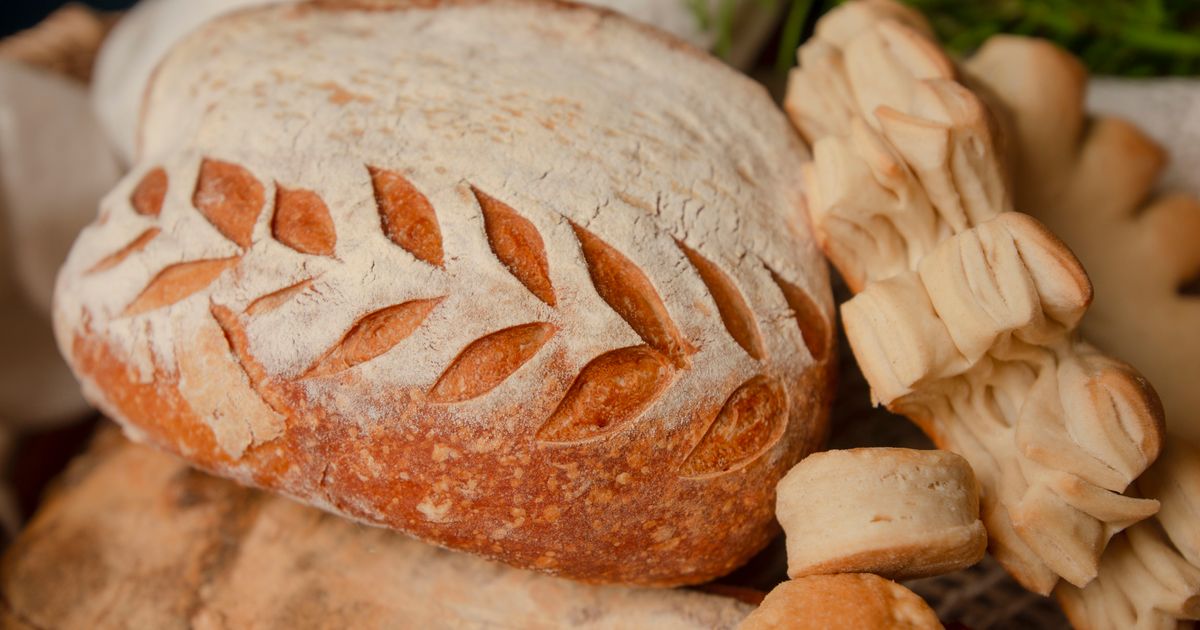
This is the hydration level I recommend for most bakers, and the experiment confirmed why. The dough was manageable with basic stretch-and-fold technique, shaped reasonably well with some practice, and produced a beautiful loaf with moderate oven spring.
The crumb showed a mix of small and medium holes with occasional larger openings. It was soft and moist without being gummy. The crust was thinner and crispier than the 60% loaf, with better color and caramelization.
Flavor was balanced. Present sourdough tang without being overwhelming, with a pleasant wheaty sweetness from the flour coming through. This loaf disappeared fastest when I set all four out for my family to taste. It was the most universally appealing, which tells me something about why most recipes settle on this range.
Handling difficulty was moderate. The dough was slightly sticky during stretch and folds but manageable with wet hands. Shaping required some confidence but was not fighting-the-dough difficult. If you follow my shaping guide and use a bench scraper, 70% is very doable.
80% Hydration: The Challenge
This is where things got interesting. At 80%, the dough was noticeably wetter, more extensible, and harder to shape. Stretch and folds felt more like stretch and drapes. The dough spread more during proofing and required a well-floured banneton to maintain shape. Loading into the Dutch oven was tricky because the dough wanted to flow rather than hold its structure.
The payoff was in the crumb. Open, irregular holes with a glossy, translucent membrane between them. This is the crumb that Instagram bakers chase, and I understand why. It is visually stunning and the texture is exceptional. Chewy, moist, almost custard-like near the larger holes. The crust was thin, crispy, and shattered when you pressed on it.
Flavor was milder than the 70% loaf. The higher water content diluted the acid concentration, producing a sweeter, more subtle taste. The crust contributed more flavor proportionally because it was thinner and more caramelized.

90% Hydration: The Extreme
I included 90% hydration mostly for science, and the results were educational. The dough was extremely slack, almost batter-like after bulk fermentation. Traditional shaping was essentially impossible, the dough flowed out of any shape I attempted within seconds. I ended up doing a very gentle fold directly in the banneton, which barely held form.
The baked loaf spread significantly during baking despite the Dutch oven constraining it. Oven spring was limited because the gluten network was stretched to its absolute limit. The crumb was wildly open with enormous cavern-like holes, but also irregular and somewhat gummy near the bottom where the weight compressed the structure.
Flavor was the mildest of all four loaves. Very sweet, almost no perceptible tang. The texture in the spots where the crumb was good was incredible, paper-thin walls of bread with a glossy, custardy quality. But the inconsistency made it impractical as an everyday bread. You cannot make a sandwich with bread that has inch-wide holes in every slice.
My Recommendations by Skill Level
Total beginners: Start at 65% hydration. Focus on understanding fermentation, building confidence with shaping, and producing consistent results. A slightly lower hydration gives you more control while you learn.
Intermediate bakers (10+ loaves): Work at 70-72%. This is the range where great bread happens without excessive difficulty. Gradually push toward 75% as your handling improves.
Experienced bakers: Explore 75-80% for open crumb artisan loaves. This range rewards good technique with stunning results but punishes mistakes.
Adventurous experts: Try 80-85% for focaccia, ciabatta, and open-crumb showcase loaves. Beyond 85% is educational but not practical for regular baking.
What I Learned
The biggest lesson from this experiment was that higher hydration is not inherently better. It produces a different bread, not a superior one. The 60% loaf was the best for toast and sandwiches. The 70% loaf was the most versatile and crowd-pleasing. The 80% loaf was the most photogenic. The 90% loaf was the most interesting but the least useful.
The second lesson was that hydration interacts with every other variable. Higher hydration requires longer bulk fermentation because the acids are more diluted, needs stronger flour to compensate for the additional water, and demands more skilled handling at every stage. Changing hydration is not just turning one dial. It shifts the entire balance of your process.
My advice is to find the hydration level that matches your goals and skill level, then stay there long enough to truly master it before moving on. I spent six months at 70% before I started experimenting higher, and that foundation made every subsequent adjustment easier to understand and manage. There is no shortcut to handling skill, and no amount of reading (even this article) substitutes for the feel of dough in your hands at each hydration level. Go bake. Start where you are. And do not let anyone convince you that your 65% loaf is somehow lesser than someone else's 80% one. Good bread is good bread, regardless of the number.
⚠️Disclaimer: This article is for informational purposes only. Fermenting and brewing require strict food hygiene — including correct fermentation times, temperatures, and cleanliness. Home-brewed beverages may contain alcohol. When in doubt, consult a food safety expert.
Published by the Sourdough Joe editorial team. Published April 3, 2026.
Editorial responsibility: see Imprint.
Spotted an error or have something to add? corrections@sourdoughjoe.com
🧭Part of our topic hub: Fermentation Science→You might also like

Why Your Sourdough Keeps Spreading Flat (And How to Fix Your Shaping)
That pancake-shaped loaf isn't a fermentation problem. It's a shaping problem. Here are the techniques that finally gave me tall, round loaves with real oven spring.
Troubleshooting Gummy Sourdough Bread
Your sourdough looks perfect on the outside but the crumb is gummy, sticky, or doughy inside? Here are the most likely causes and fixes.

How to Convert Any Bread Recipe to Sourdough
That favorite bread recipe from your grandmother or a cookbook? You can convert it to sourdough. Here is the simple math and method to make it work every time.
Explore more
All articles on Sourdough Joe →
Fresh from the Oven
New recipes, baking science, and troubleshooting tips — every Saturday morning.
🎁 Free bonus: Your First Sourdough Loaf Guide (PDF)