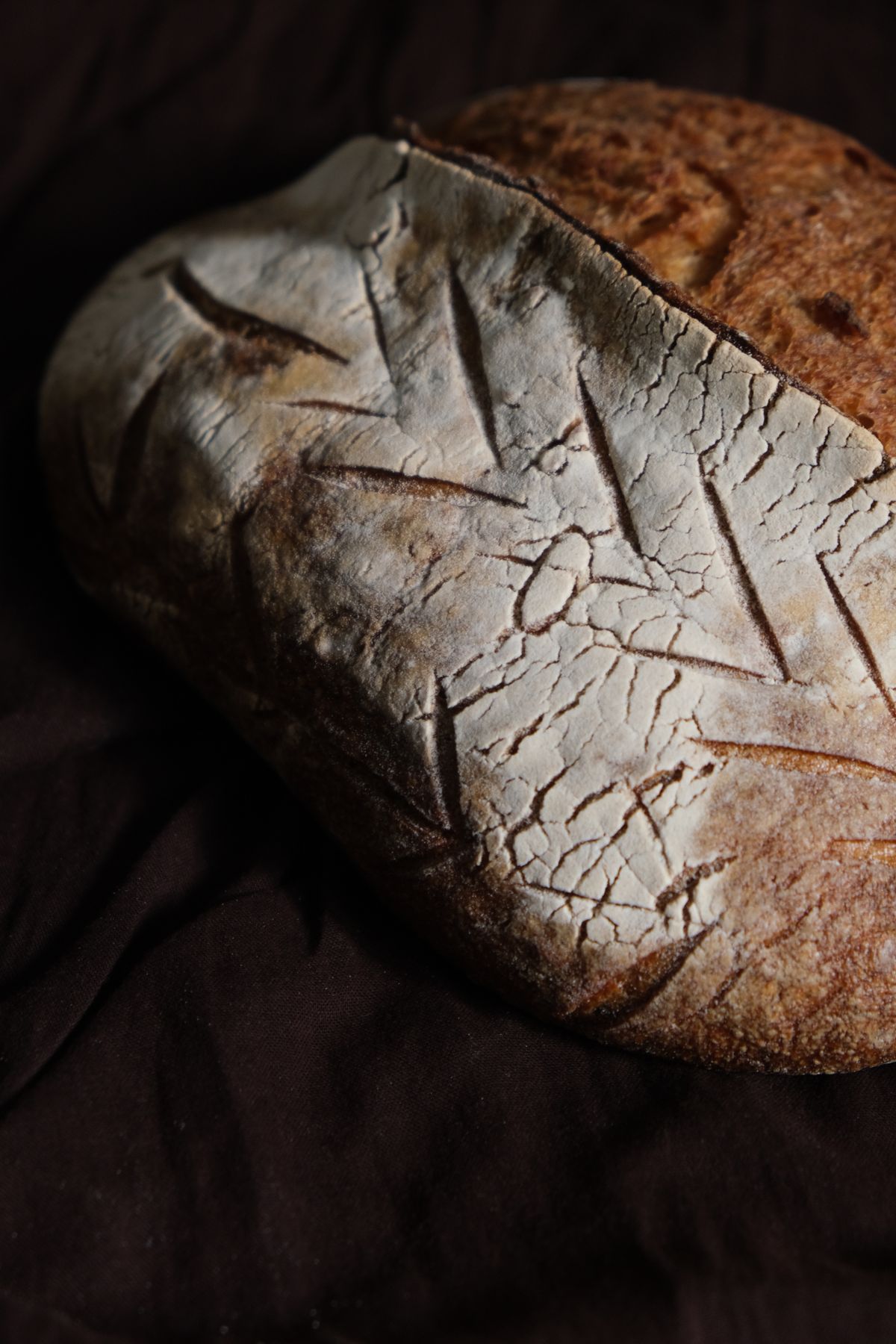
Shaping & Scoring: technique that shows in the final loaf
A score cut needs to be about 0.5cm deep at a 30-degree angle to control where a loaf expands in the oven — too shallow by even 2mm and the bread tears randomly instead. This hub covers shaping techniques for round boules and oval batards, 6 to 8 decorative scoring patterns, banneton use, and the stretch-and-fold versus coil-fold debate. Clean technique here has more visible impact on the final loaf than any single ingredient change.
All guides on Shaping & Scoring

Why the Windowpane Test Matters More Than You Think
That thin, stretchy membrane everyone talks about isn't just a party trick. It tells you exactly how your gluten is developing — and when your dough is ready.
Read guide →
Your First Rye Sourdough Loaf Without the Frustration
Rye flour is sticky, temperamental, and plays by different rules than wheat. Here's how to bake a gorgeous rye sourdough on your first try — no brick-shaped disasters required.
Read guide →
Scoring Sourdough: Why Your Cuts Disappear and How to Get a Real Ear
You draw a beautiful score line across your loaf, and twenty minutes later the oven has erased it completely. Here is what is actually going wrong — and the small adjustments that produce dramatic ears every time.
Read guide →
Coil Fold vs Stretch and Fold: Which Technique When
Two popular dough-handling techniques, each with its strengths. Learn when to use coil folds versus stretch and folds for the best results.
Read guide →
Scoring Sourdough Like You Mean It: Patterns, Blades, and the Science Behind the Slash
Scoring isn't just decoration. The way you cut your dough controls how it expands in the oven, affects the crust, and determines whether you get that coveted ear. Here's everything you need to know.
Read guide →
How to Score Sourdough for Decorative Patterns
Beyond the basic ear: learn how to create leaf patterns, wheat stalks, geometric designs, and more on your sourdough loaves.
Read guide →
Advanced Sourdough Shaping: Coil Folds, Lamination, and Stitch Method
Ready to move beyond basic stretch and fold? These three advanced dough handling techniques build stronger gluten, incorporate mix-ins cleanly, and give you more control.
Read guide →
Sourdough Shaping Techniques: Boule and Batard
Read guide →
Bread Lame vs Razor Blade: Which Scoring Tool Do You Need?
A bread lame and a razor blade both score dough, but they handle differently. Here is a quick comparison to help you choose the right tool for your baking style.
Read guide →
Sourdough Scoring Patterns: A Visual Guide
Read guide →
Mastering the Stretch and Fold Technique
Read guide →
Banneton Guide: Material, Size, and Care
A banneton supports and shapes your sourdough during proofing. Here is everything you need to know about choosing the right one, preparing it, and keeping it in good condition.
Read guide →
Bench Scraper vs. Dough Scraper: Small Tools, Big Difference
A bench scraper and a dough scraper cost less than a fancy coffee but will transform how you handle dough. Here is what each one does and why you need both.
Read guide →
Scoring Bread: Technique, Patterns, and Tools
Scoring is where function meets artistry. Learn why we score bread, how to hold a lame, the most popular scoring patterns, and how to get those dramatic ears and blooms.
Read guide →
Windowpane Test and Poke Test: How to Know When Your Dough Is Ready
Tired of guessing whether your dough is properly developed or proofed? The windowpane test and poke test are the two most reliable hands-on checks every baker should master.
Read guide →Sourdough Shaping for Beginners: Boule, Batard & Beyond
Master the two essential sourdough shapes — boule and batard — with this beginner-friendly guide. Clear technique breakdowns with troubleshooting tips.
Read guide →New guides on Shaping & Scoring are added regularly and appear here automatically as soon as they go live.
Frequently asked questions
Why do I need to score my bread before baking?
Scoring creates a controlled weak point for the loaf to expand through during oven spring — without it, the crust tears randomly wherever the internal pressure finds the thinnest spot. A single confident cut at a 30-degree angle, about 0.5cm deep, works better than several shallow, hesitant ones.
Stretch-and-fold or coil fold — which builds better gluten structure?
Coil folds are gentler on the dough's gas structure, which suits higher-hydration doughs (80%+) that are harder to handle with traditional stretch-and-folds. Standard stretch-and-folds work well for moderate hydration (70-75%) and are generally easier for beginners to learn first.
Do I really need a banneton, or can I use a regular bowl?
A bowl lined with a well-floured towel works as a functional substitute, though a banneton's ridged pattern helps grip the dough surface during proofing and leaves a decorative spiral pattern after baking. The difference is more cosmetic and grip-related than functional for the final crumb.
How tight should my shaping be?
Tension should be firm enough that the dough holds its shape without sagging, but not so tight that the surface tears — a properly shaped boule should feel taut like a balloon, not slack. Under-shaping is the more common beginner mistake and leads to flatter, wider loaves.
What's the difference between a boule and a batard shape?
A boule is round and typically gets a higher, more domed rise, while a batard is oval and tends to bake with a longer, more even crumb structure suited to sandwich-style slices. The shaping technique for each redistributes surface tension differently around the loaf.
Lame or a plain razor blade for scoring — does it matter?
A curved lame angles the blade automatically for the correct scoring angle, making consistent cuts easier for beginners, while a straight razor blade held by hand gives more direct control once you've learned the right angle. Both produce identical results in experienced hands; the lame just shortens the learning curve.